How to Choose the Right English Format for Your Child Without Killing Their Motivation
How to choose the right English format for your child by considering age, interests, workload, and the first signs of a good fit.
· 7 min read · 5 sources

Photo: Tima Miroshnichenko
If your child quickly loses interest in English, the problem is not necessarily their ability. Often, the class format, pace, family expectations, and the things the child actually enjoys simply do not match. At the beginning, the main goal is not to build a large vocabulary within a few months, but to create regular, manageable contact with the language.[1] [2] [3]
Children can start in the preschool years, but there is no single “perfect” age for everyone. Young children usually benefit from games, songs, movement, and short stories, while school-age children may enjoy projects, speaking activities, and topics connected with their interests. Starting later can also work well: progress depends not only on age, but also on the amount, quality, and regularity of the child’s language experience.[1] [5]

Photo: Thirdman
80 min
average weekly workload in the review[2]
598 pairs
children and parents in the motivation study[4]
Step 1. Set a realistic goal
Start with a simple question: why does your child need English right now? The goal may be practical: understanding basic instructions, preparing for school, communicating while travelling, reading favourite books, or speaking more confidently in class. For a preschooler, “become fluent” is too vague, while “learn to say hello, name favourite toys, and understand a short song” is clearer and more achievable.[1] [2]
Do not compare your child with classmates or promise quick results. Scientific reviews have examined different programmes for preschoolers, most often in small groups and using books, repetition, games, and speaking activities; the results varied considerably between programmes. It is therefore more important to look at what the classes actually include than to be impressed by a bold promise about a particular method.[2] [5]
- 1.Write down one practical goal for the next two or three months.
- 2.Work out how much time your child can realistically spend on classes without sacrificing sleep, schoolwork, or free time.
- 3.Ask how the teacher supports children who are not yet speaking much.
- 4.Choose a way to track progress: short phrases, understanding instructions, taking part in a game, or reading a familiar story.
- 5.After four to six weeks, talk with your child about what they enjoy and what they would like to change.
Step 2. Match the format to your child’s age and personality
For children roughly between three and six, it usually makes sense to start with playful lessons: short activity cycles, movement, objects, pictures, songs, and repeated everyday phrases. For younger schoolchildren, it is useful to combine speaking, reading, simple writing, and small projects. An active child may enjoy a format with games and frequent changes of activity, while a quieter child may prefer a small group and a predictable structure.[1] [2] [5]
Online classes are not automatically worse than in-person lessons, but they require adult involvement and a format that suits the child’s attention span. For preschoolers, live interaction is especially important: the teacher should be able to notice the child’s reactions, ask questions, and help them join in the game. If getting to class takes a long time or the school timetable is unpredictable, a hybrid option may be more practical than regularly missing lessons.[2] [3]
| Age | What usually works | What to look for |
|---|---|---|
| 3–5 years | Games, songs, pictures, movement | Short activities and a warm, supportive teacher |
| 6–9 years | Games, dialogues, reading, projects | A clear goal and varied activities |
| 10–14 years | Speaking, projects, the child’s interests | The group’s level and a respectful tone |
Step 3. Check whether the format supports motivation
A child’s motivation does not grow through rewards alone. They also need to feel capable, have some limited choice, and understand the purpose of an activity. Let your child choose a project topic, book, song, or convenient class day. Praise effort and persistence, not only correct answers: “You figured it out from the picture” is more helpful than constantly judging the result.[3] [4]
A systematic review of research on enjoyment in language learning shows a connection between interest, engagement, and willingness to continue learning, although a substantial share of the studies focused on adult learners. A separate study involving 598 children and 598 parents found that children’s perception of family support was associated with motivation and participation in activities. This does not mean that a parent has to become a second teacher: calm interest and a supportive environment are enough.[3] [4]
At home, keep English short and natural: look at a picture, name a few objects, sing a familiar song, or read one page. If your child is tired, do not turn practice into a compulsory evening lesson. In families where adults do not speak English confidently, books, audio materials, and classes that do not require constant parental translation can be a good choice.[1] [2] [4]
Step 4. Avoid common mistakes when choosing a class
The first common mistake is choosing a course solely because of the age listed in the advertisement or a promise of “quick results.” The second is enrolling a child in several activities at once, leaving no time to adjust. The third is treating silence as failure: at first, a child may listen more, understand instructions, and participate nonverbally. Assess progress gradually and ask the teacher what is actually happening during the lessons.[1] [2] [3]
Pay attention to the group size, lesson length, variety of activities, feedback, and the teacher’s attitude towards mistakes. A good sign is when the teacher can explain which skills are currently developing and how the family can support them without pressure. If pronounced anxiety, persistent pain, sleep problems, or a sharp decline in wellbeing appear, temporarily stop the classes and discuss the situation with a paediatrician.[1] [2]
Key takeaways
- Choose English classes based not on promises of results, but on how well they match your child’s age, interests, and daily routine.
- For preschoolers, games, movement, songs, books, and small groups are often the best fit.
- Consistency and emotional safety matter more than overloading a child with extra activities.
- Parental support means showing interest and praising effort, not testing vocabulary every day.
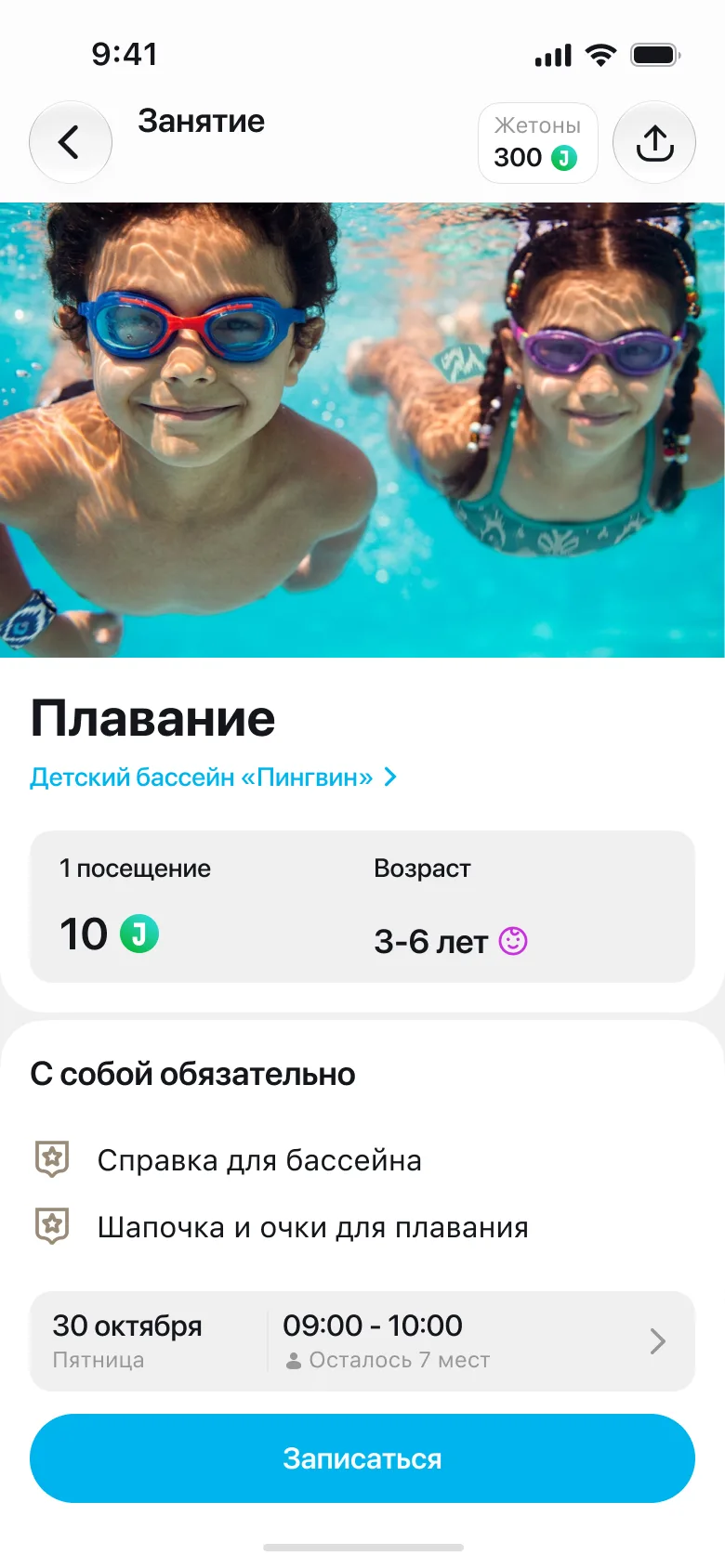
- A children’s subscription can help you try different activities and understand which format suits your child.
Frequently asked questions
Does my child need to start English before school? No, there is no mandatory starting age. Early exposure may provide more time to become familiar with the sounds and play with the language, but schoolchildren and teenagers can also make noticeable progress with regular practice. Choose a time when your child has the energy for a new activity, rather than simply an empty slot in the timetable.[1] [5]
What should I do if my child refuses to speak English? Do not force them to answer in front of the group or correct every mistake. Discuss alternative tasks with the teacher: pointing to a picture, repeating a phrase with the group, acting out a role, or answering later. If the resistance continues, check the workload, group composition, and communication style, and then change the format if necessary.[3] [4]
Sources
- Young Children Learning Several Languages: Parents’ Questions · American Academy of Pediatrics
- Interventions to Develop Second-Language Vocabulary in Children Under Six: A Systematic Review · Cochrane Collaboration
- Enjoyment of Foreign-Language Learning: A Systematic Review · Peer-Reviewed Scientific Journal
- How Parental Support Affects Children’s Motivation and Engagement in Learning English · PubMed Medical Research Database
- Starting to Learn a Second Language: The Role of Age and Language Environment · PubMed Medical Research Database